


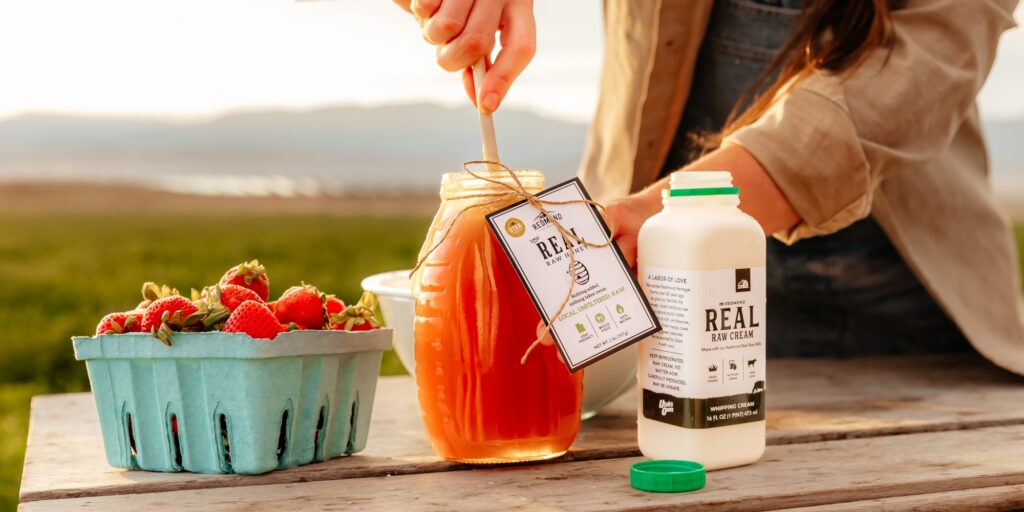
Many of us grew up squeezing honey from a plastic bear. It was sweet, it was golden, and it got the job done. But that honey probably had very little in common with what bees actually make.
If you’ve started paying attention to what’s in your food, you’ve likely come across the term “raw honey.” Maybe you’ve seen it at a farmers market, spotted it on a health blog, or noticed it on a jar at a natural foods store. And you’ve probably wondered: is it actually different? Does it matter?
The short answer is yes. Here’s the longer one.
What Makes Honey “Raw”?
Raw honey is honey in its most natural state, taken from the hive and minimally processed before it reaches you. That typically means it’s been strained to remove debris like wax and propolis, but it hasn’t been heated to high temperatures or ultra-filtered.
Most of the honey you’ll find in a conventional grocery store has been through quite a bit more than that.
Commercial honey is usually heated (pasteurized) to make it flow more easily through processing equipment and to slow crystallization on store shelves. It’s also often ultra-filtered under high pressure, which produces that crystal-clear appearance most shoppers expect.
The result looks clean and pours smoothly. But a lot gets lost along the way.
What Gets Preserved in Raw Honey?
Honey isn’t just sugar. Fresh from the hive, it contains naturally occurring enzymes, antioxidants, pollen, and small amounts of vitamins and minerals. These are the things that make raw honey more beneficial nutritionally than other sweeteners.
Enzymes. Bees add enzymes to nectar during the honey-making process. One of the most notable is glucose oxidase, which helps produce hydrogen peroxide (one of the reasons honey has historically been used to support wound healing). Heat destroys these enzymes.
Antioxidants. Raw honey contains polyphenols and flavonoids, plant-based compounds with antioxidant properties. The darker the honey, generally the higher the antioxidant content.
Pollen. This is one of the biggest things lost in ultra-filtration. Bee pollen is nutrient-dense on its own, and its presence in honey is also how researchers can identify where honey came from. When you remove the pollen, you lose both the nutritional value and the traceability.
A more complex flavor. Raw honey tastes like where it came from. The nectar sources, the region, the season—all of it comes through in the flavor in a way that processed honey can’t replicate.
What About Crystallization?
Here’s something that trips people up: if your raw honey turns solid or grainy in the jar, that’s not a sign it’s gone bad (in fact, raw honey is one of the few foods that never goes bad if stored properly). That’s a sign it’s real.
Crystallization is a natural process. Almost all raw honey will crystallize eventually—some faster than others, depending on the ratio of glucose to fructose in the nectar. Honey high in glucose (like clover honey) tends to crystallize quickly. Other varieties may stay liquid for months.
To bring crystallized honey back to its pourable state, just set the jar in warm water (Not hot. You don’t want to damage what you’re trying to preserve). It’ll loosen right up.
Highly processed honey is treated specifically to prevent crystallization and extend shelf life. But that stability comes at the cost of everything that makes honey so nutritious.
Can Everyone Eat Raw Honey?
Most people, yes. Honey (raw or otherwise) has a remarkably long shelf life because of its low moisture content and natural acidity. Properly stored, it doesn’t spoil. Archaeologists have found 3,000-year-old honey in Egyptian tombs that was still edible.
There’s one important exception: raw honey should not be given to infants under 12 months old, regardless of the source. Honey can contain spores of Clostridium botulinum, which an infant’s immature digestive system can’t handle safely. This applies to all honey, raw or pasteurized.
For everyone else, raw honey is a great, versatile sweetener.
Not All Raw Honey Is the Same
The word “raw” on a label tells you something about how the honey was processed. It doesn’t tell you everything about the honey itself.
Where the bees forage, how the hives are managed, what the surrounding landscape looks like—all of these shape the final product. A jar of raw honey from a healthy hive in a diverse, natural environment is going to be different from raw honey produced in an industrial setting, even if both technically qualify as “raw.”
This is why we care about sourcing, and why we’re intentional about where our honey comes from.
Our Honey: From the Wild Places of Southern Utah
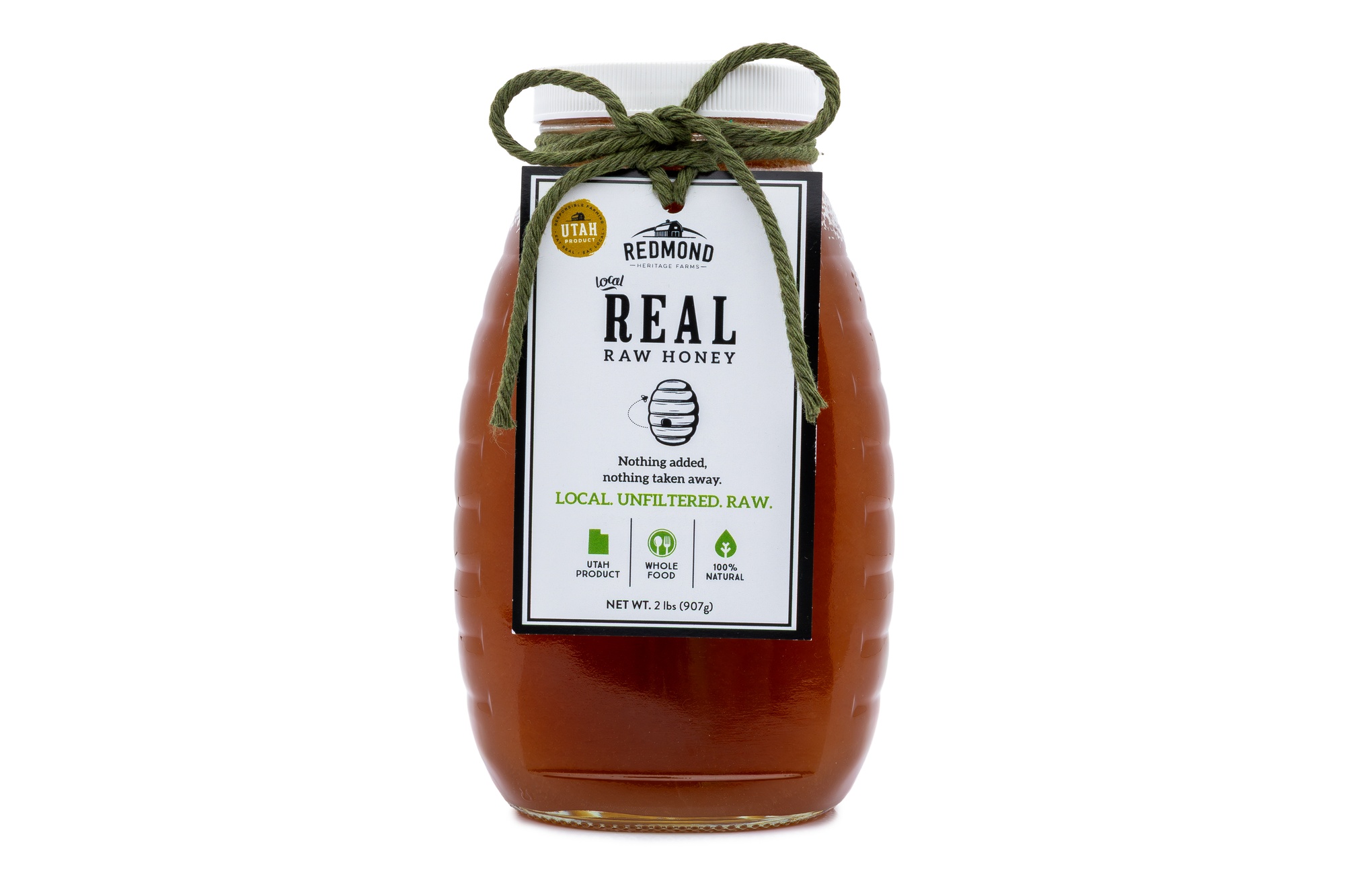
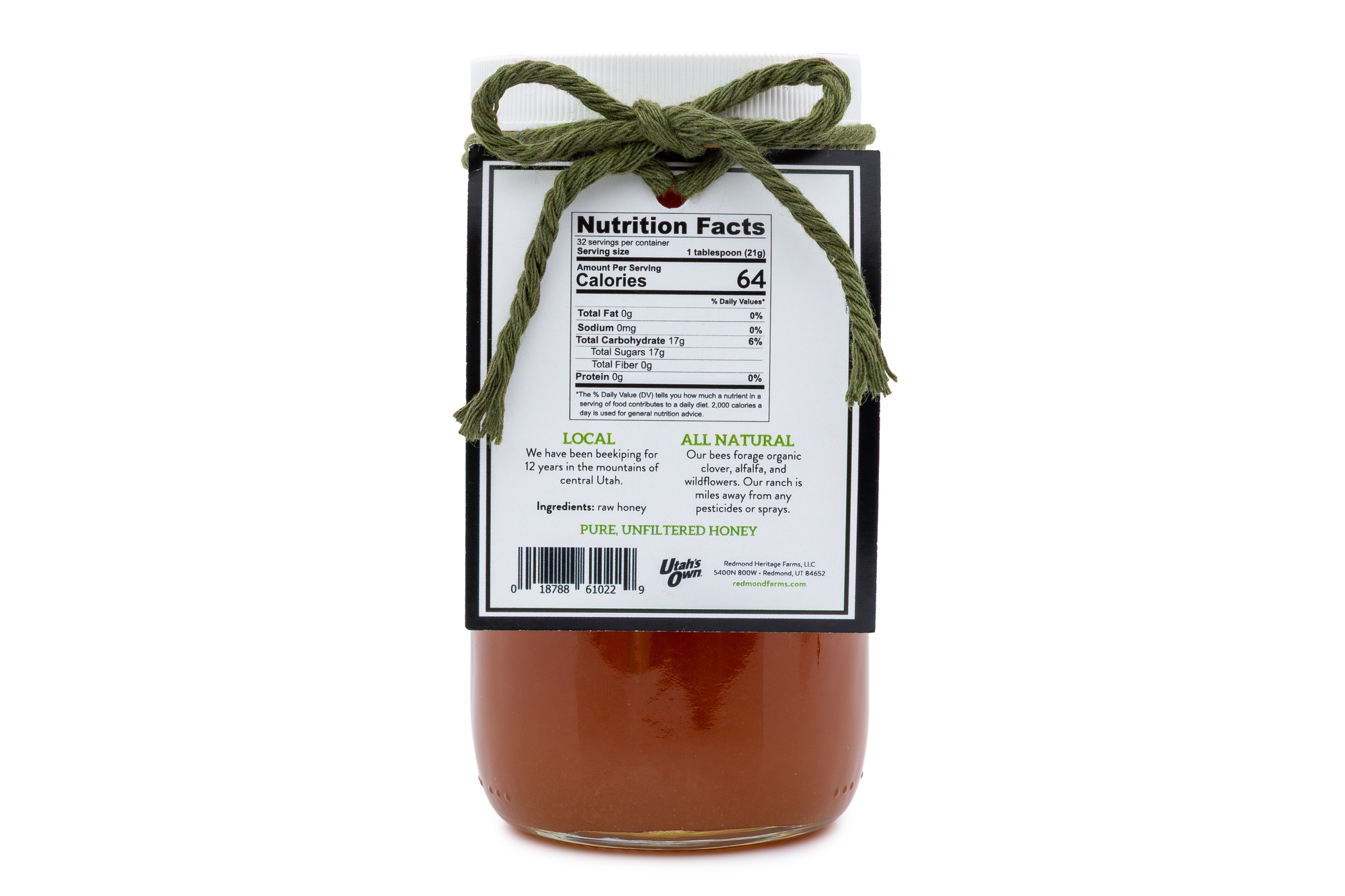
At Redmond Farm Market, we source our honey from a local beekeeper who keeps hundreds of hives in southern Utah. The bees spend their time foraging across the wild landscape of the region—native plants, desert blooms, and the open terrain that makes southern Utah what it is.
We don’t filter it beyond what’s needed to remove wax and debris, and we don’t cut it with anything. What goes in the jar is 100% pure raw honey, exactly as the bees made it. No added sweeteners. No shortcuts.
Because the bees are working across a landscape that shifts with the seasons, the honey can vary from batch to batch—in color, in flavor, in how quickly it crystallizes. That variation isn’t a flaw. It’s the nature of real honey made by real bees in a real place.
If you’ve ever tasted honey and thought there’s something different about this one, that’s what you’re tasting.
How to Use Raw Honey
Raw honey is a natural substitute anywhere you’d use conventional honey or a liquid sweetener. A few ideas:
Drizzle it over yogurt or oatmeal
Stir it into tea (let the tea cool slightly first—boiling water will destroy those enzymes)
Use it in salad dressings or marinades
Spread it on toast with butter
Add it to baked goods in place of sugar (Use about ¾ cup honey per 1 cup sugar, and reduce other liquids in the recipe slightly. Some sources also suggest reducing the oven temp by 25°F since honey browns faster. )
Eat it straight from the spoon—no judgment here!
The Bottom Line
Raw honey is honey that hasn’t been stripped of what makes it good for you. The enzymes are intact. The pollen is there. The flavor reflects where it came from. It’s a real food doing what it’s done for thousands of years. If you’re looking to swap out processed sweeteners for something more natural, raw honey is a solid place to start.
You can find our raw Utah honey at any Redmond Farms location. Stop in, grab a jar, and taste the difference for yourself.
Find a Redmond Farms location near you.